
Every drape starts on a loom, not a screen
Deleeza Fabrico works out of Mota Varachha in Surat — the district that has supplied India's saree trade for four generations. We make three things properly rather than everything adequately.
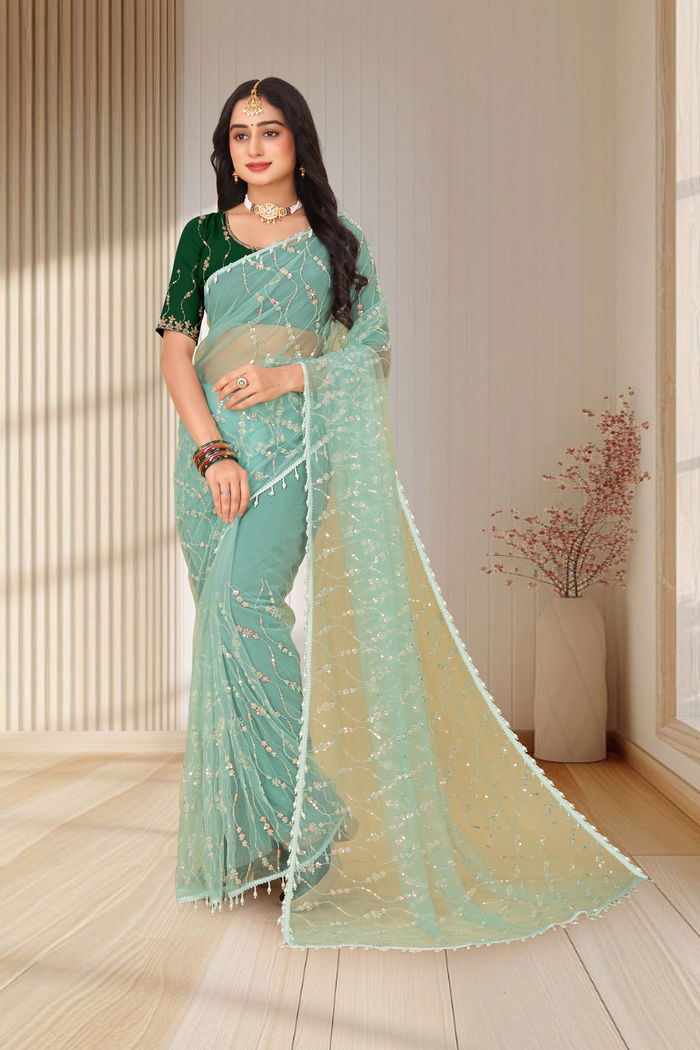
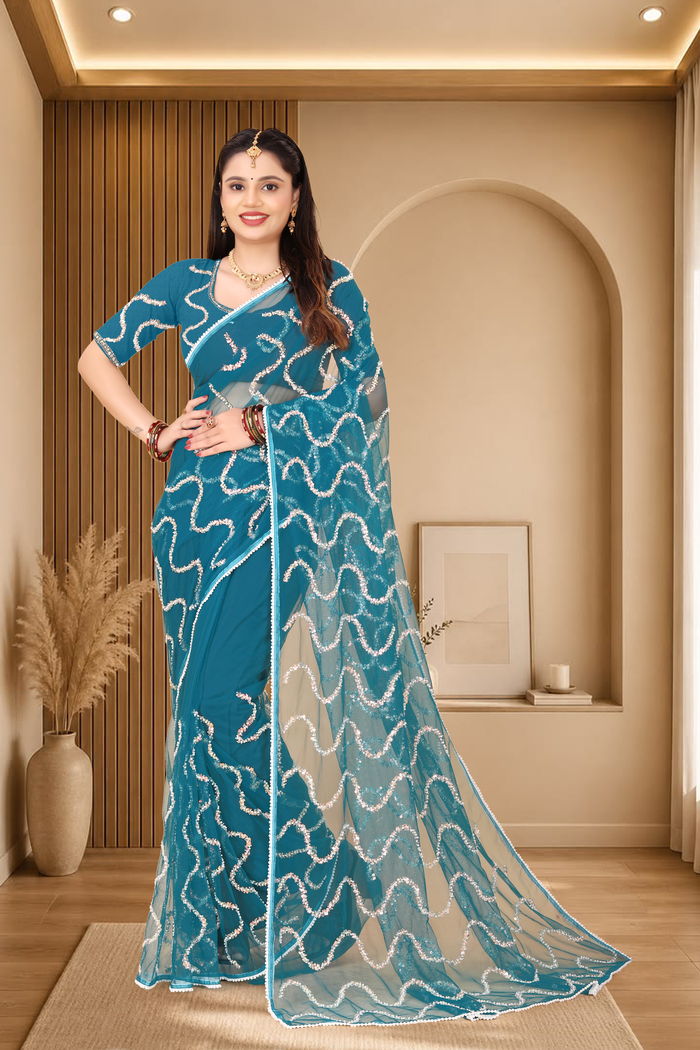
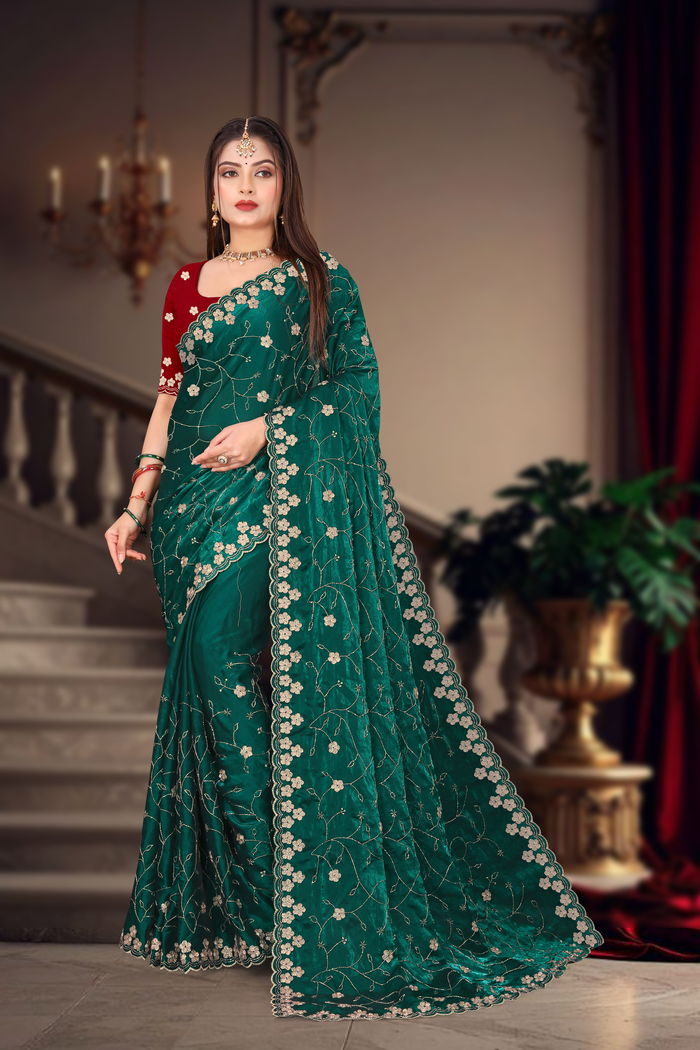
The Loom Floor
Our Nagin jacquard is thrown on punch-card looms rather than printed. The serpentine lehariya you see running through a D-32 drape is structural — woven into the cloth in resham, not laid on top of it. A single colourway takes a full day of setup before the first metre runs.
The Cutwork Table
D-30 begins as plain viscose net. Karigars mark the scalloped jaal by hand, embroider it in metallic thread, then cut the ground away motif by motif so light passes through the negative space. There is no undo on a cutwork table — one wrong snip and the panel is finished.
The Zari Frame
For D-35 we still use antique-finish real zari on a stretched frame. The border and pallu are worked with an aari needle from beneath the cloth, which is why the reverse of a heritage drape reads almost as cleanly as the face.
Slow by construction
A handwoven drape is made once and worn for decades. That is the whole argument for doing it this way — and the reason our catalogue is twenty-one pieces rather than two hundred. Each colourway is a finite run off a finite warp.
1998
Weaving in Surat
40+
Karigars & Weavers
21
Drapes in Catalogue